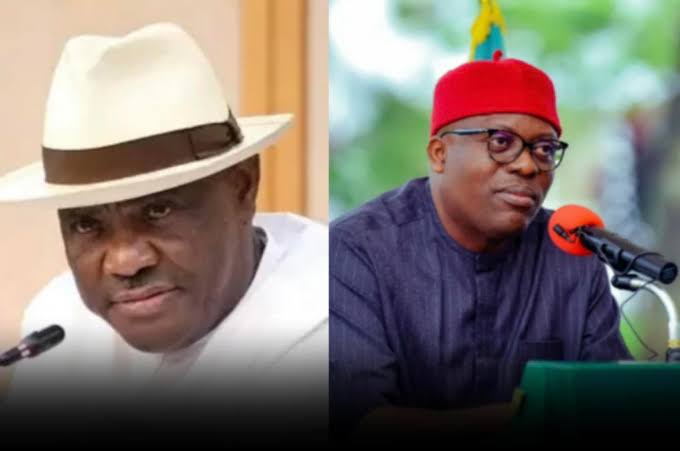
As the 2027 general elections draw closer, the political calculus in Rivers State is shifting into overdrive. Far from a standard-issue party contest, the state has transformed into a high-stakes laboratory for cross-party realignments, coalition-building, and intense posturing between major political heavyweights.
At the heart of this dynamic are FCT Minister Nyesom Wike and Governor Siminalayi Fubara, whose evolving relationship continues to dictate the pace of regional politics.
Wike Draws the Line: The 2027 Presidential Battleground
FCT Minister Nyesom Wike has made his 2027 intentions crystal clear, boldly declaring that Rivers State is locked down for President Bola Tinubu's re-election bid. According to Wike, opposition parties stand no viable chance in the state, pointing to a formidable network of cross-party actors working in tandem.
Rather than relying strictly on traditional party lines (PDP, APC, or LP), Wike’s camp is championing a broad-based, pragmatic framework focused heavily on state development, federal integration, and sustaining Rivers State's national political relevance. Political analysts have dubbed this localized convergence a "Rainbow Coalition," pulling together heavy influences across municipal and grassroots structures.
The Fubara Factor and Structural Alignment
The narrative in the state capital has also been heavily shaped by recent reconciliation efforts between Governor Fubara and his predecessor. Following a turbulent legislative season that saw fierce friction over budgets and executive oversight, recent political maneuvers have seen the Governor lean into structural alignments aimed at stabilizing the state's governance space.
With Governor Fubara recently signing off on the state's monumental 2026 fiscal budget alongside leadership from the State House of Assembly, both executive and legislative arms have signaled a temporary "breath of fresh air". This thaw has direct implications for 2027, as political stakeholders look to avert mutual destruction in favor of a unified front under established structures.
What This Means for the Opposition
Regional opposition figures and minor party structures find themselves facing an uphill battle against a deeply entrenched machinery. While opposition voices continue to push for structural accountability, public trust, and democratic ideals at the polls, the Wike-led coalition is betting heavily on consolidated grassroots networks and federal alignment to suppress any upset.
As maneuvers intensify behind closed doors and across the 23 local government areas, PORTHARCOURTBLOG will keep tracking how these high-level realignments shape the road to 2027.



0 Comments